Echoes in the Storm: Inside the World of Tahoe’s Search and Rescue

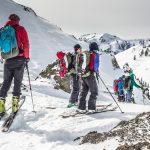
The terrain was steep and unforgiving. Exposed rocks forced them to clip in and out of their skis every few yards. The wind howled so loud they couldn’t hear each other’s voices, and the whiteout made even their headlamps fade into the storm.
Sarah Krammen, president of Tahoe Nordic Search and Rescue, stared into the blur of snow.
“This is going to be impossible,” she thought.
Wind and ice cut into TNSR’s team as they dropped onto the backside of a local resort. They searched for a man they knew almost nothing about — just a name and a last known location somewhere above a ski lift.
Then, for a heartbeat, the storm paused.
The wind eased, and the world opened just enough for them to spot faint ski tracks cutting across the slope. Hope flared.
They followed the tracks — only to realize the prints backtracked. Confusion set in as they tangled with other rescuers’ paths. Desperate, they shouted the man’s name into the white silence.
And then — an answer. A faint voice, carried by the wind.
They followed it, skiing and scrambling over two valleys and three ridgelines, until they found him — cold, but alive. Somehow, his voice had carried far enough for Krammen’s team to hear.
“If it weren’t for that one break in the wind,” Krammen said, “we might not have found him.”

The formation of Tahoe Nordic Search and Rescue
TNSAR is a nonprofit, all-volunteer organization that works closely with local sheriff’s departments and other agencies to conduct search-and-rescue operations for those lost or injured in the rugged Sierra Nevada.
Based in the Truckee–North Lake Tahoe area, the organization was founded after two 12-year-old boys became lost off the backside of Northstar Ski Area in 1976. At the time, there were no organized search-and-rescue protocols. Their father, along with a group of volunteer skiers, braved the blizzard in their search — still, one of the boys died.
The tragedy prompted the formation of Tahoe Nordic Search and Rescue.
Over the decades, the team has faced countless emergencies across Lake Tahoe — sometimes thrilling, sometimes routine, and sometimes heartbreakingly grim. Some missions, no matter how carefully planned, inevitably become body-recovery operations, testing the limits of skill, endurance, and emotional resilience.
Facing the Toughest Moments in the Sierra
When a missing man’s truck was discovered at a trailhead in Placer County, a mutual-aid mission was called. Navigating steep, technical terrain dotted with exposed rocks, Krammen and two teammates were assigned a particularly challenging search zone.
Hours into the search, they encountered two others combing the area. With no uniforms or badges, it quickly became clear they were worried family members. The fear and desperation in their eyes made the danger and urgency of the mission suddenly personal, and an unspoken connection formed in the treacherous landscape.
“We wanted to get him back to his family alive,” Krammen recalled. “But if he wasn’t… we needed to return his body to them.”
The man tended to venture into the mountains alone, without letting anyone know. Now, a week after his last contact, Krammen knew the chances of finding him alive were low.
Eventually, they located him, lifeless, in extremely difficult mountain terrain.
After a helicopter extracted his body, Krammen chose to walk out the long, technical route with her teammates, carrying the weight of the mission with every careful step.
The emotional strain of moments like these mirror patterns seen in other fields.
After World War II, many returning soldiers found it difficult to convey the intensity of their experiences to those who hadn’t lived them. But among other veterans, they could speak freely and begin to process what they’d been through.
This understanding is built into TNSAR. After traumatic events, like recovering a deceased person, team members create space to talk openly with colleagues who have faced similar situations or were alongside them during the call. It’s a way to acknowledge the emotional weight of the work and support one another.
Though the walk out took hours and Krammen reached the trailhead in pitch darkness, every step offered a moment to process the day’s events with her teammates.
“Celebrating all the successes is awesome,” Krammen said. “But what brought me closest to the team was dealing with tragedy together.”

While Krammen responds to calls of all difficulty levels, volunteers at TNSAR self-select which mission they take. When a call carries a high likelihood of a body recovery, volunteers can decide to opt out.
The organization handles a wide range of calls — from routine lost hikers to complex, high-stakes rescues… and, every so often, ones that are… well, hard to put into words.
Goldilocks’ Rescue
It had been a late night at the bar. Henry, fueled by one too many drinks, staggered off into the darkness. His friends didn’t think much of it… until the next morning, when it became painfully clear Henry hadn’t made it home.
Panicked, they called 911, kicking off a search-and-rescue mission.
Troy Corliss, a member of TNSAR, responded to the call for a missing man.
Corliss and his team combed the surrounding area — bars, streets, parks, and nearby neighborhoods. Confusion began to set in; despite their thorough search, they couldn’t locate him. Every possibility raced through their minds, from medical emergencies to sudden accidents.
Then, a call came over the radio; “The search is over.”
Corliss would later understand why they had been unsuccessful.
As the team scoured the streets, the sheriff had received an unusual call. A homeowner had noticed an extra pair of shoes in his mudroom and investigating further, he discovered a strange man snuggled in his guest bed.
When the sheriff arrived at the house, he recognized the man: it was Henry.
“You’re sleeping in someone else’s bed,” the sheriff said, shaking him awake.
“Oh God! My girlfriend is going to kill me!” Henry shrieked.
From tracking a missing man through a blizzard to discovering he had broken into a cabin for shelter — and was calmly roasting marshmallows over the fire pit — Corliss, Krammen, and the rest of TNSAR have seen it all. Every call brings a new mix of danger, absurdity, and the completely unexpected.
Henry’s real name was omitted in accordance with TNSAR privacy protocols.
“The mountains are calling, and I must go.”
— John Muir, Scottish naturalist and mountaineer, 1838–1914
One thing is clear: the Nevada Sierra can be unforgiving. Winds whip across ridges, storms roll in without warning, and jagged terrain tests even the most experienced adventurers. And yet, for many of us, the mountains still call.
Part of TNSAR’s mission is to ensure the public can answer that call responsibly. From backcountry enthusiasts to local schoolchildren, the team works to promote winter safety across the Tahoe community. Their Winter Aware program, for example, introduces fourth graders to the basics of navigating snowy terrain safely — teaching them to S.T.O.P., observe their surroundings, build emergency shelters, and signal for help.
It’s not just theory. TNSAR emphasizes practical precautions: check the weather, share your plans, charge your phone, pack the right supplies, and get proper training. Know the avalanche conditions. Carry the right gear.
To support its mission, TNSAR hosts a yearly Nordic cross-country ski race on the North Shore of Lake Tahoe — competitive for some, purely fun for others. As an independently funded nonprofit, the organization relies on donations from businesses and individuals to purchase critical safety equipment, conduct training, and keep volunteers ready for any emergency. The Great Ski Race serves as the organization’s sole fundraiser.
The mountains are beautiful, wild, and sometimes dangerous. But with preparation, respect, and a willingness to learn, anyone who hears their call can meet the Sierra head-on — ready for their next adventure.
Editor’s note: This article originally appeared in the Winter 2025/26 edition of Tahoe Magazine.



Support Local Journalism

Support Local Journalism
Readers around Lake Tahoe, Truckee, and beyond make the Sierra Sun's work possible. Your financial contribution supports our efforts to deliver quality, locally relevant journalism.
Now more than ever, your support is critical to help us keep our community informed about the evolving coronavirus pandemic and the impact it is having locally. Every contribution, however large or small, will make a difference.
Your donation will help us continue to cover COVID-19 and our other vital local news.