Flights above Tahoe spark candid conversations on a forest protection, now being rescinded

LAKE TAHOE, Nev./Calif. – The Roadless Rule is often discussed in maps, stats, policy and debate, but a plane ride above the Tahoe Basin sparked a different conversation.
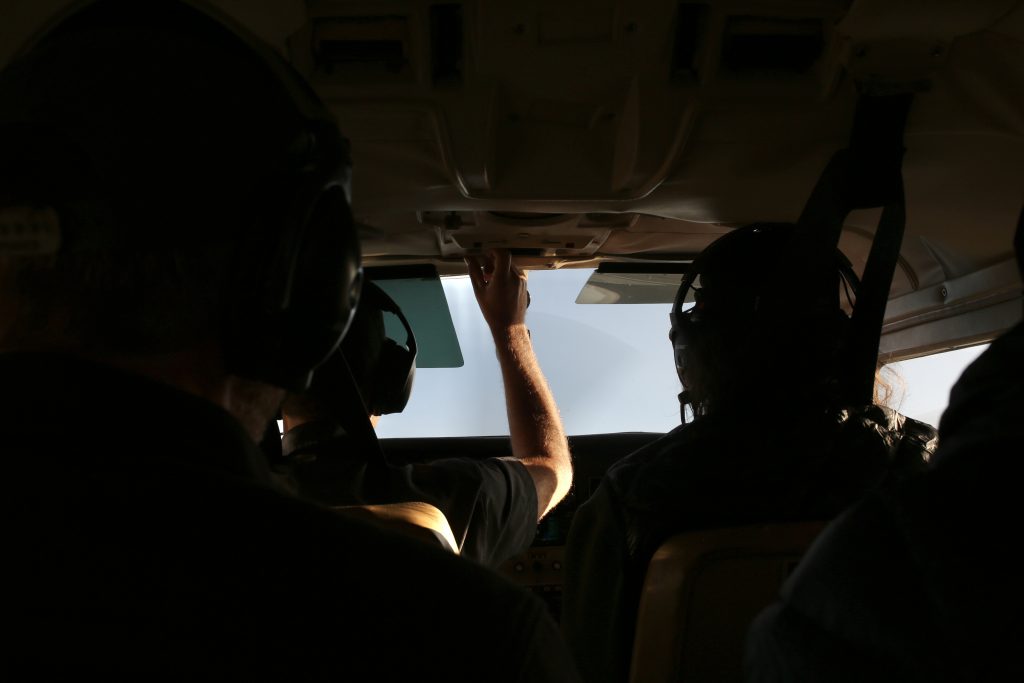
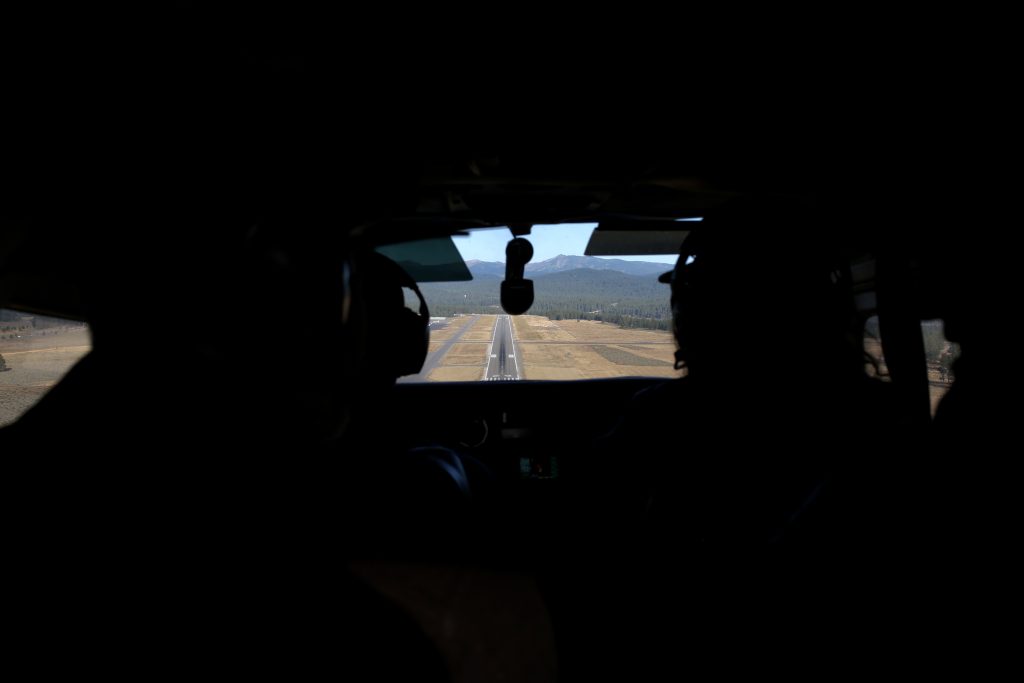
As the full six-seater plane rumbled off the tarmac and into the air on a mid-September Tuesday morning, it simultaneously put distance from the earth while drawing in a holistic view of Tahoe.
Passengers looked up from their map printouts with stats and numbers and out through the encircling windows at the Jeffrey pine-textured landscape, embellished by rock outcroppings, Donner Lake, and divided by the meandering Truckee.
And eventually, after getting to elevation, Lake Tahoe dawned into view.
The conversation through the microphones and over the headphones crowning everyone’s head organically veered toward the intersections of humans and roadless land.
“This was one of the first hikes I ever did…,” one flight participant said as the plane flew over the Castle Peak area, adding, “This is a wonderful way to get to know the northern Sierra right here.”
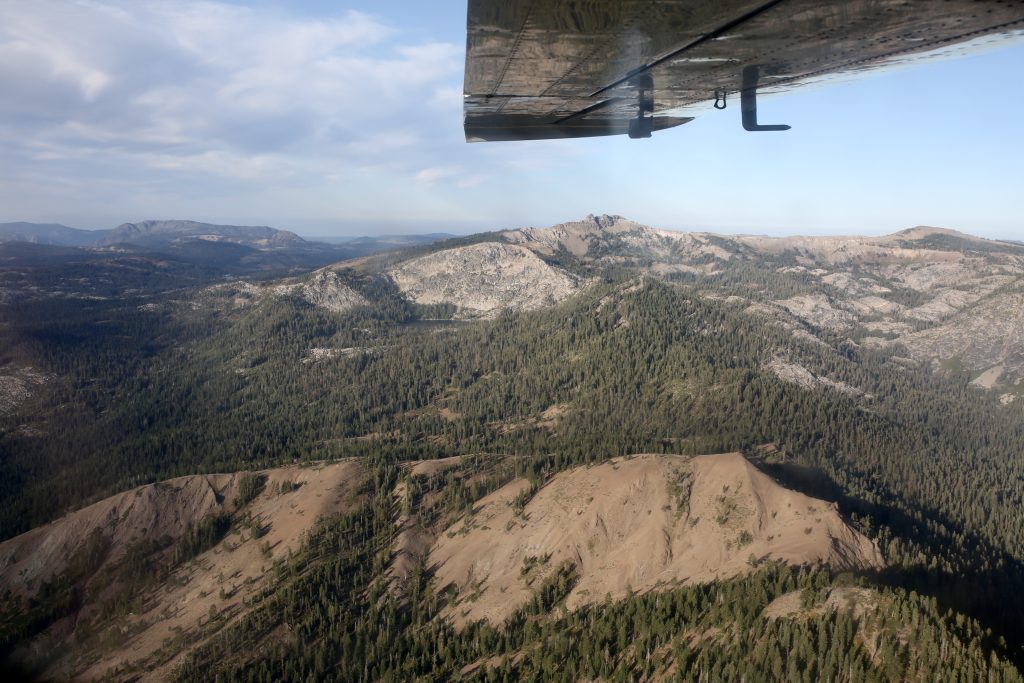
Another pointed and said, “Over there in this valley, there’s sweet pillow lines.”
“I was just on top of this last night for sunset,” someone said as the plane flew over features on the west shore.
“My wife’s hiking that today,” another said as the plane flew toward Crystal Range.
“That’s such an incredible perspective of Tallac right there…” a participant added. “I think I’m going to go do it on Thursday.”
And as the plane began its return journey to the Truckee Tahoe Airport, flying over the calm blue waters of Lake Tahoe, someone said, “It’s quite the view of home.”
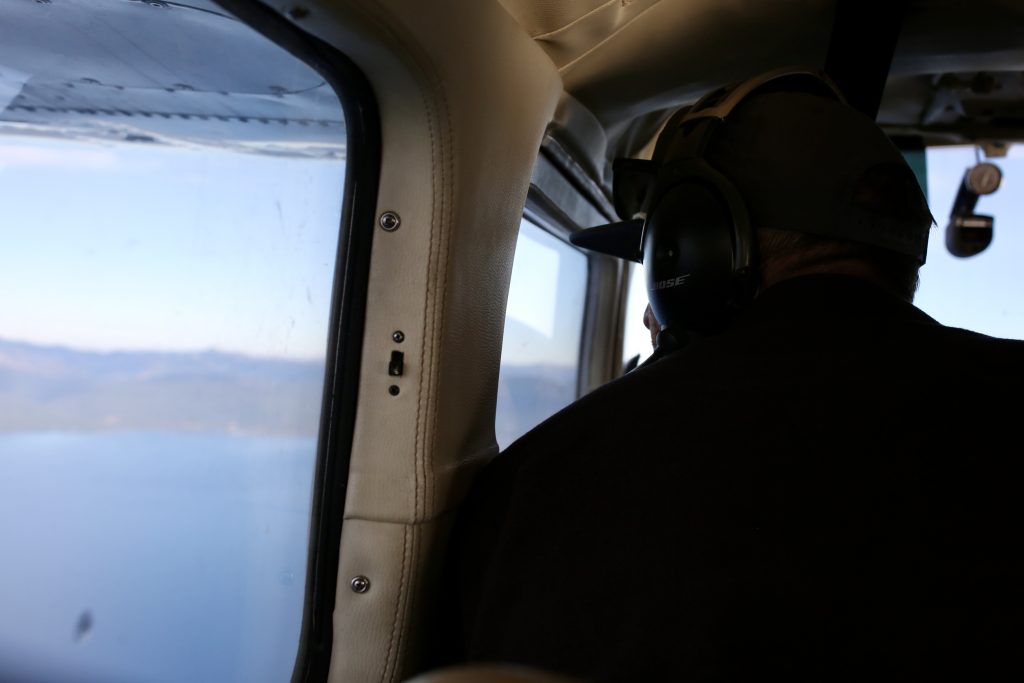
EcoFlight provided the bird’s-eye view of the basin. The nonprofit offers flights for educational and advocacy purposes related to wildlands, watersheds, and culturally important landscape topics.
This flight focused on the Roadless Rule, a particularly pervasive topic right now because of its proposed reversal and the upcoming Oct. 6 public comment deadline.
Flight participants included an alpinist/climber, high school student, university teacher and other regional stakeholders and residents interested in learning more about the 25-year-old National Forest Service regulation that has protected and conserved the largest remaining undeveloped landscapes in the nation.
It has done so by prohibiting new roads and timber harvest on close to a third of National Forest System lands since its inception in 2001.
Background on rescission
The rule has made numerous headlines since the summer of 2025, when the U.S. Department of Agriculture, the parent agency of the National Forest Service, stated an intention to roll back the rule.
The announcement has sparked action, including town halls and opposition from conservation, recreation and other groups concerned about the repercussions.
Since its initial announcement, the USDA has taken steps that culminated in a formal proposal filed on August 18 to rescind the rule entirely.
This action opened a comment period ending September 21, which was recently extended to the Oct. 6 deadline.
The debate
The U.S. Forest Service says the Roadless Rule has created barriers to wildfire risk-reduction, insect outbreak and disease prevention, and other forest health treatments, due to restrictions on road construction.
Another motivating factor for the rollback, the service says, is the action will place decisions about roadless areas in the hands of local national forest managers.
“Returning decision-making authority to local leaders ensures that issues such as reducing wildfire risks and forest health are addressed based on local conditions rather than a one-size fits all regulation,” the Forest Service said in an explainer on the rule.
Conservation groups, who attribute the rule to protecting environmental resources, habitats and recreational experiences, as well as supporting tribal uses, have a different point of view.
While the service cites wildfire risk as a reason to remove the rule, some conservation groups point to data showing that wildfires are more likely to start in areas with roads than in roadless areas, and that 90% of wildfires nationwide have occurred within a half mile of a road.
Groups also say that the Roadless Rule already allows for forest treatments.
Other concerns include opening public lands to private and corporate interests through logging and mining.
Brennan Lagasse, sustainability assistant professor at the University of Nevada, Reno at Lake Tahoe and flight participant, expressed concern about setting a precedent with the rescission.
“We don’t want to allow a precedent like this to happen because really the impacts are going to be so much more cumulative down the line as well.”
The Roadless Rule and Tahoe
In the Tahoe region, the Roadless Rule protects lands holding well-known landmarks and areas, including Castle Peak, Granite Chief, forests that skirt Desolation Wilderness, and portions of the Tahoe Rim Trail. These lands also encompass Freel Peak, the tallest peak in the Tahoe area, as well as swaths of Tahoe’s west and east shore.
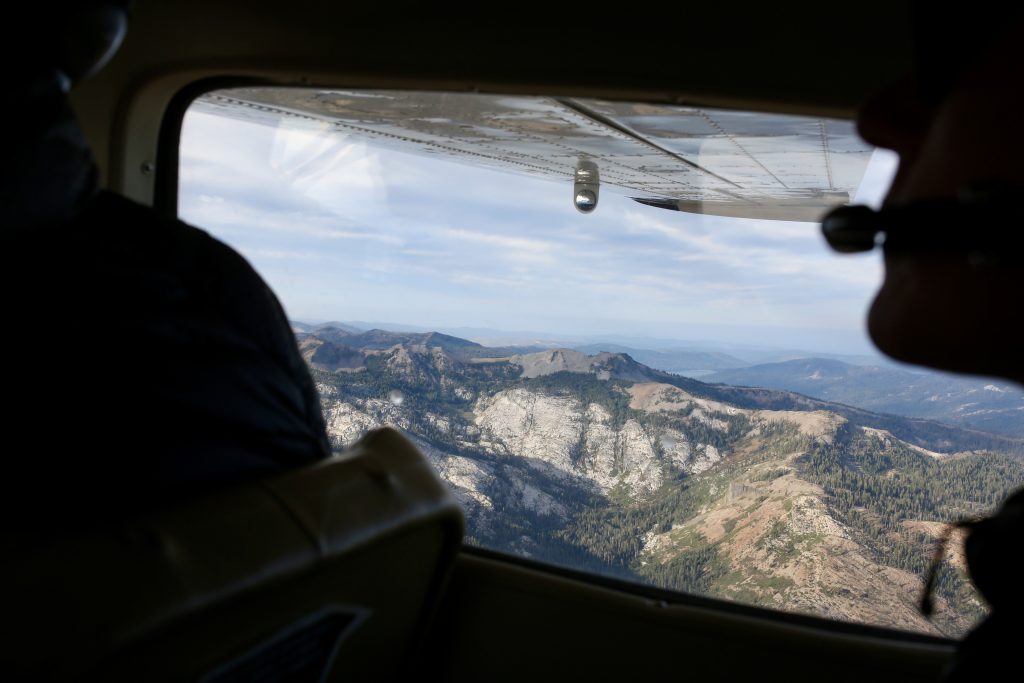
“I think the roadless rule is inextricably linked to the identity of Tahoe,” Lagasse said, who became familiar with the area through skiing. He pointed to the region’s identity as a world-class recreation destination, known for its access to lakes, mountains, streams and forests, which also drive the economy. He expressed fear over how the rule change could alter access.
“Your favorite place that you’ve been going with your family for generations,” he said, “could all of a sudden turn into not that place anymore because of the impacts and the implications of this rule.”
Another flight participant, Truckee High Schooler Michaela “Koko” Bruce, recalled a core memory in a roadless area near Granite Chief.
“It was the best because you feel like you’re completely separated from any sort of civilization,” she said, adding, “I think preserving the idea of being able to be in the wild and make sure that it keeps feeling like you’re actually in the wild is a really important aspect of all of it.”
Roadless areas encompass close to a quarter (41,000 acres) of Forest Service-Lake Tahoe Basin Management Unit lands and, to the north, 6% (46,000 acres) of Tahoe National Forest Lands.
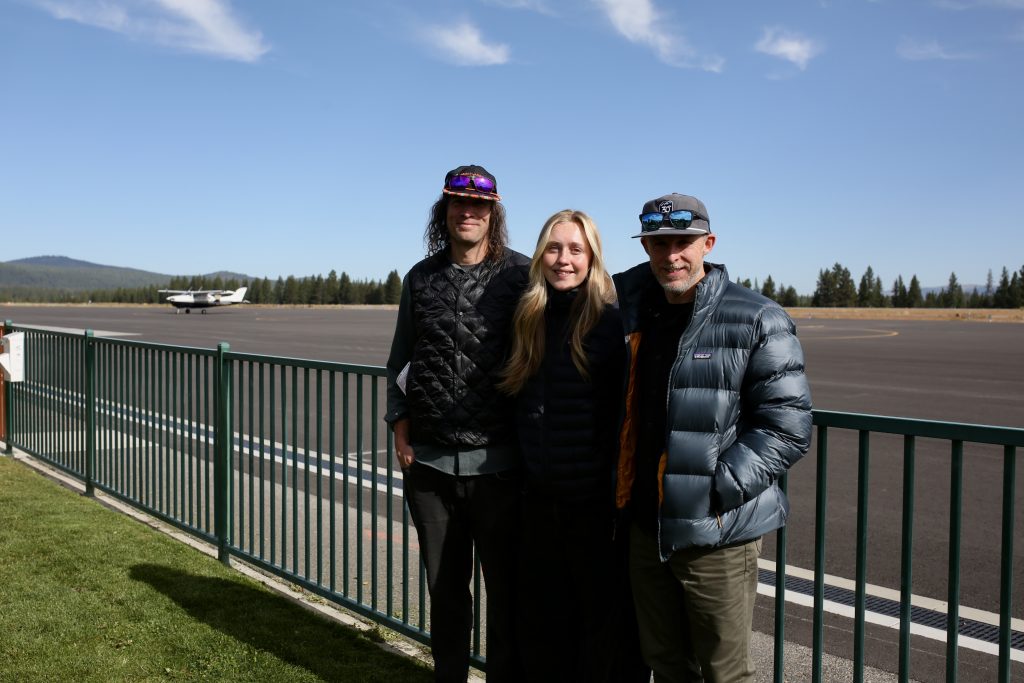
“I think with the roadless thing, [what] so many people don’t realize,” another flight participant, alpinist and climber Tommy Caldwell, said, “It’s literally their backyard, especially here in Tahoe. Literally, you walk 100 feet out of my back door, and you’re in a roadless area.”
He first became involved with the rule while raising awareness for Alaskan forests in his film, the Devil’s Climb, which he discussed in his keynote at the Tahoe Summit.
Caldwell compared climbing in roadless areas versus non-roadless areas, saying, “The experience as climbers is oftentimes just vastly different,” with non-roadless areas often overrun with vehicles.
Whether it’s access, recreation, or fighting extraction, Caldwell says he approaches the Roadless Rule from multiple angles and is particularly focused on the climate change implications.
That’s a topic the local, well-known organization, Keep Tahoe Blue, keyed into when it published its stance opposing the rescission.
“Tahoe’s roadless forests are part of the Basin’s natural climate resilience system,” their statement said, explaining that intact forests store carbon, protect watersheds, and provide habitat that allows wildlife to respond to changing conditions.
The organization also believes repealing the roadless rule and allowing roads into these areas could impact the mission behind its name, threatening Tahoe’s famed clarity through increased erosion from new roads.
The Tahoe region has an added layer of protection through the Tahoe Regional Planning Agency, its regulations and process, though many still believe the rule’s rollback could spell consequences for the region.
Public comment
Another major concern with this rescission has been the USDA’s lack of public engagement, with short comment periods and, to date, no public meetings planned.
That compares to the over 600 public meetings and 1.6 million public comments that spawned the rule’s adoption in 2001. Around 95% of those comments supported protections for roadless areas.
According to the government website, the rescission proposal has received over a quarter of a million comments as of Sept. 24.
A few groups and individuals have argued that full rescission could have concerning implications, but that doesn’t mean the rule couldn’t use an update.
“While rescinding the Rule would do little to boost timber production or reduce catastrophic wildfire risks, modernizing it makes common sense,” Katie Hawkins, California Policy Manager for Trout Unlimited, said. “Landscape conditions, new data, local economies, and user needs have evolved significantly since the Rule was first adopted.”
At a town hall in May, retired LTMBU forest supervisor, Erick Walker, proposed finding a meaningful middle ground where the rule isn’t necessarily rescinded, but intelligent modifications are made.
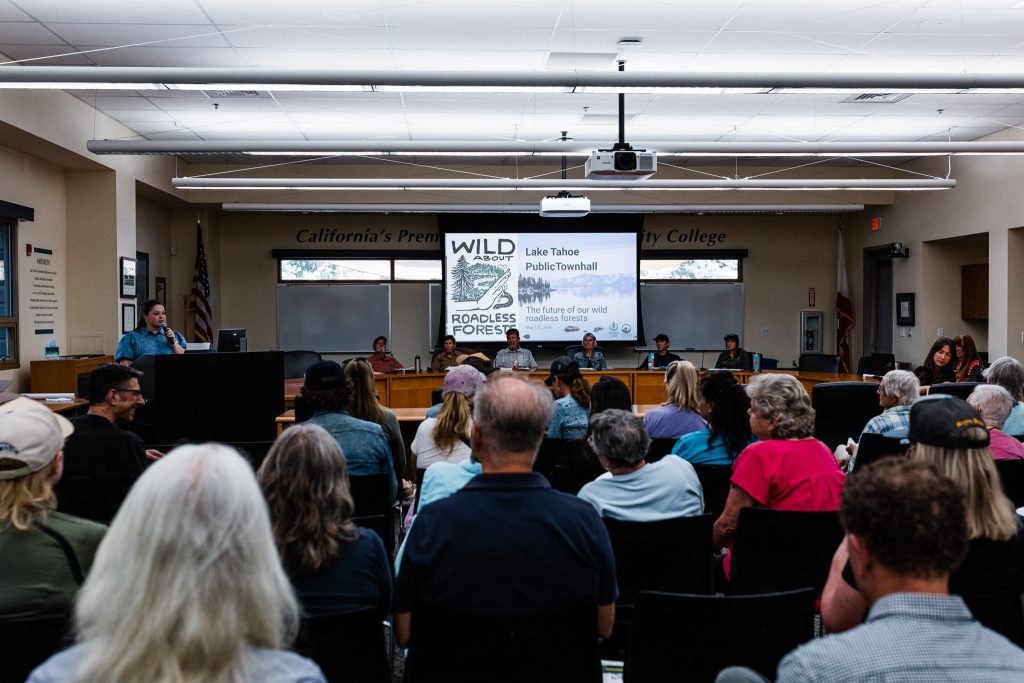
At that same meeting, Jenny Hatch, executive director of the Sierra Nevada Alliance, also said they are looking for a middle path “that provides intact forests, but also restoration and access and special services.”
Many taking this stance say that adequate public engagement is vital to reaching an appropriate update or middle ground.
Hawkins also said, “Updating the policy through a robust public process ensures local Forest Service officials and district-level staff retain the authority required to manage Roadless Areas, protect forest health, and mitigate wildfire risks effectively.”
With the proposal filed in August, the Forest Service also submitted a draft Environmental Impact Statement analyzing the environmental effects of both keeping the rule and rescinding the rule. It also analyzed a third alternative of modifying the rule to maintain protections on 13 million acres, while removing it on 31.7 million acres.
“Alternative 3 is not a modest middle ground,” the Sierra Nevada Alliance said, explaining it would remove protections from roughly 71% of roadless areas and does not consider more targeted approaches that could retain roadless protections while providing additional management flexibility where there is a demonstrated need.
To view the Forest Service’s proposal and to comment by Oct. 6, visit regulations.gov.




Support Local Journalism

Support Local Journalism
Readers around Lake Tahoe, Truckee, and beyond make the Sierra Sun's work possible. Your financial contribution supports our efforts to deliver quality, locally relevant journalism.
Now more than ever, your support is critical to help us keep our community informed about the evolving coronavirus pandemic and the impact it is having locally. Every contribution, however large or small, will make a difference.
Your donation will help us continue to cover COVID-19 and our other vital local news.