Lincoln Highway: First Transcontinental Automobile Highway
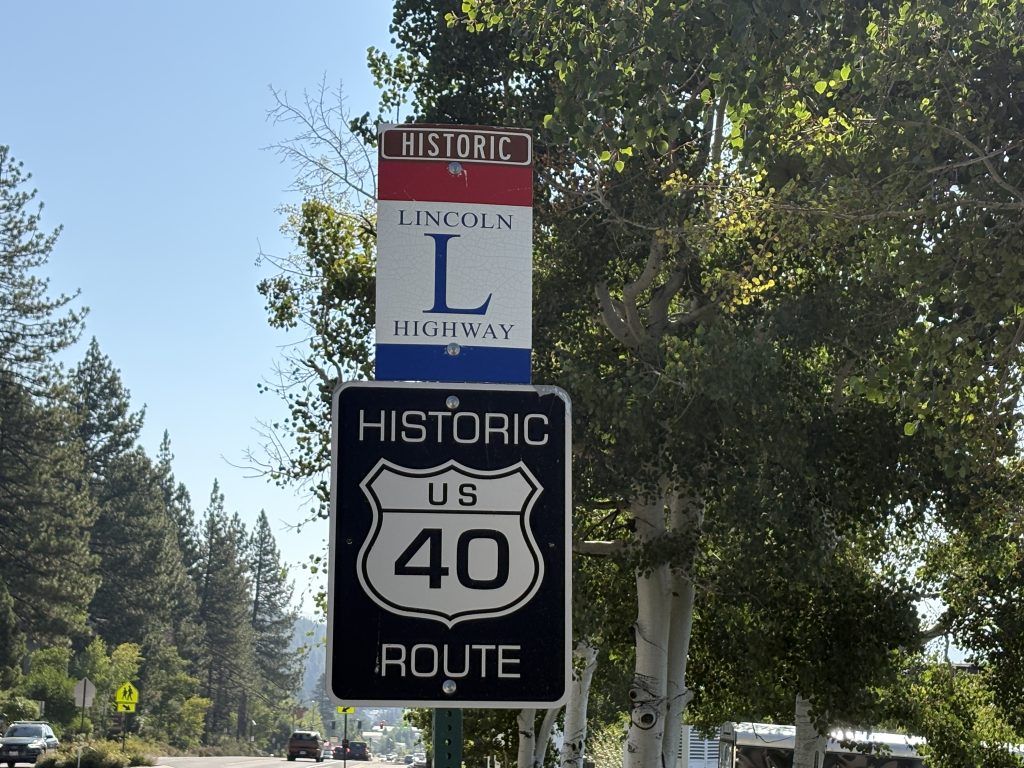
The Transcontinental Railroad opened up the West to the rest of the United States. However, by 1913 the increasing popularity of travel by automobile made it apparent that America needed to have a continuous improved highway from the Atlantic to the Pacific that was open to all and had no toll charges.
At this time the nation had no monuments yet to President Abraham Lincoln. It was thought to be a good selling point in favor of building the highway if it was dedicated as a lasting memorial to him. The newly formed Lincoln Highway Association focused itself on determining the route of the highway using existing roads, listing needed connections and then encouraging local jurisdictions and states to build the needed connecting routes. Initially 3,389 miles were laid out for America’s first highway that went from Times Square, New York City to Lincoln Park, San Francisco.
Not much of a highway
It was difficult driving across the country even with the Lincoln Highway. When it rained, pleasure drivers would usually stop until the mud on the roads dried up. Then they would be left navigating the gulleys and uneven road beds.
By 1916 following the road was easier with its red, white and blue markers all along the route. The road was slowly becoming concrete because people realized that leaving the highway as dirt made it a very expensive and constant maintenance problem. For example, the first transcontinental Army convoy traveled on the highway in 1919 going 3310 miles in 62 days averaging 53 miles per day. Dwight Eisenhower was on the trip and that experience spurred him to push for our present interstate highway system.
In 1913 it was estimated there were only 150 transcontinental trips by cars. By 1923 the number had grown to approximately 20-25,000 automobiles. Where it used to take 60 days to travel across the country via automobile, by 1923 twenty days was achievable.
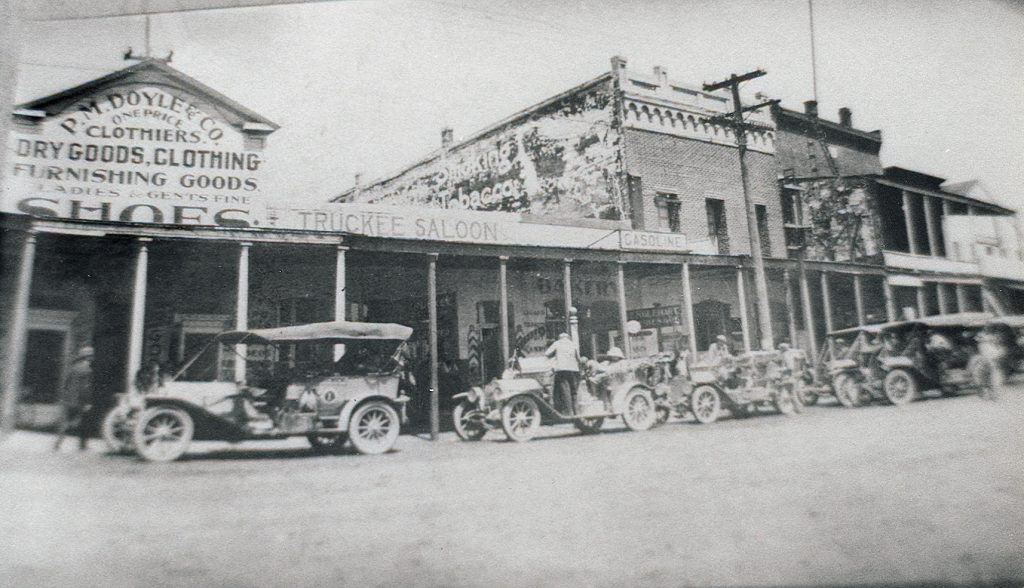
Early car travel was still not easy. The official 1924 travelers guide stated the following:
- Don’t wait until your gasoline tank is almost gone since it may not be attainable at the next point you figured on.
- Don’t allow your canteen to be other than full with fresh water.
- Don’t carry loaded firearms in the car.
- Don’t forget the camphor ice since the dry weather of the West will crack your lips and fingers.
- Don’t ford water without first wading through it.
- Don’t wear new shoes.
- Always carry an oil can.
How to learn more
The Lincoln Highway is part of local history as it passed through Donner Summit after leaving Reno, Carson City and Lake Tahoe on its way to San Francisco. To learn more about the development and history of the Lincoln Highway join us for the Museum of Truckee History historical speaker series.
When: Tuesday, August 11
Time: 6:00 – 7:00 pm
Where: 10356 Truckee Airport Road. Truckee
The speaker, Jim Bonar is a retired teacher and member of the Lincoln Highway Association. He is the Nevada State Director and past President of the Nevada chapter of the Lincoln Highway association. Jim’s presentation will cover the history of the Lincoln Highway, how and where it crossed the country and its evolution. An array of old photographs taken during its time of existence will transport you on a tour across the country on the historic Lincoln Highway.




Support Local Journalism

Support Local Journalism
Readers around Lake Tahoe, Truckee, and beyond make the Sierra Sun's work possible. Your financial contribution supports our efforts to deliver quality, locally relevant journalism.
Now more than ever, your support is critical to help us keep our community informed about the evolving coronavirus pandemic and the impact it is having locally. Every contribution, however large or small, will make a difference.
Your donation will help us continue to cover COVID-19 and our other vital local news.