Water services in Olympic Valley consider consolidation, initiate study

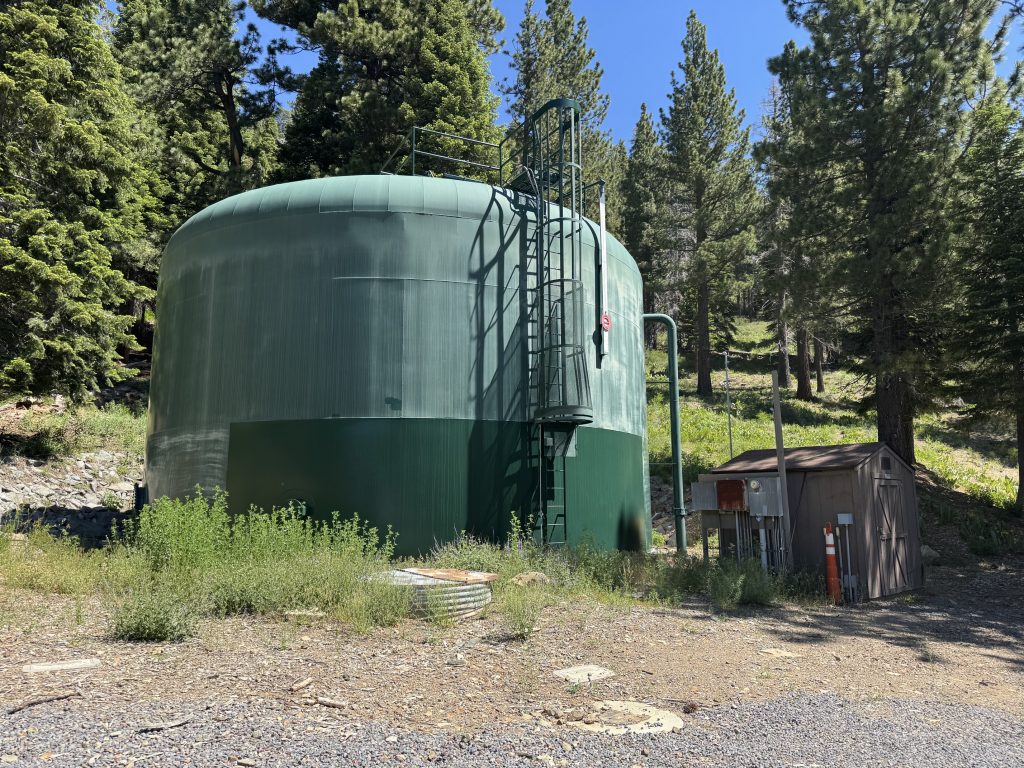
Provided / David Stepner
OLYMPIC VALLEY, Calif. – The two agencies that provide water to residents in Olympic Valley are considering consolidating.
The Olympic Valley Public Service District (OVPSD) provides water to around 1,300 residential customers and 700 commercial customers each year, while also providing sewage management, solid waste collection, fire protection, and emergency medical assistance to all of Olympic Valley.
The Olympic Valley Mutual Water Company (OVMWC), established in the 1950s, provides water to 269 customers.
A study is currently being conducted to evaluate the economics and logistics of consolidating their water services.
“The district already operates a large water service with professional staff and asset management programs and regulatory compliance systems, [and] capital planning processes,” Charley Miller, OVPSD general manager, said. “So one thing that we ask ourselves when we’re evaluating is whether those resources can provide efficiencies and long-term service reliability if we were consolidated together.”
Although the discussion is still in its early stages, David Stepner of OVMWC said, “There are legitimate reasons to consider consolidation, but it must occur on financial terms that are acceptable to our members.”
Per OVMWC’s structure since its establishment, its assets are owned by its customers, who all have a right to water and a vote on major decisions, like consolidation.
Stepner noted that consolidation could provide several potential benefits to OVMWC, including operational efficiencies, economies of scale, and improved risk management.
He pointed out that OVPSD maintains in-house operators, engineers, and other technical staff, whereas OVMWC currently contracts for these services.
Access to these internal resources could improve service delivery and reduce long-term costs.
OVPSD is also eligible for grants and greater resources for inevitable capital projects on the aging system.
Infrastructure efficiency and geography are also factors, since both agencies use the same aquifer.
“They have their own tanks,” Miller explained. “They have their own distribution system. They have wells in the parking lot next to ours, but it’s just been operated separately.”
This isn’t the first time consolidation was on the table.
“Consolidation was considered once, perhaps 25 or more years ago,” Stepner said, “but communication was poor, and misinformation was rampant. The membership vote, which is required, turned it down, which, in retrospect, was a big mistake.”
Stepner explained that, for a long time, OVMWC did not set aside funds for future capital replacements.
“So, when major upgrades were required starting in 2011, the water company had to borrow money from the USDA. This could have been avoided,” he said. “The company now has long-term planning in place, and stretches assessments out over time. However, the risk remains of significant assessments in response to major emergencies, due to the small population size.”
In May, the Placer County Water Agency (PCWA) Board of Directors approved $70,500 for the study.
Any decision to consolidate would still require substantial technical and financial review, as well as public transparency.





Support Local Journalism

Support Local Journalism
Readers around Lake Tahoe, Truckee, and beyond make the Sierra Sun's work possible. Your financial contribution supports our efforts to deliver quality, locally relevant journalism.
Now more than ever, your support is critical to help us keep our community informed about the evolving coronavirus pandemic and the impact it is having locally. Every contribution, however large or small, will make a difference.
Your donation will help us continue to cover COVID-19 and our other vital local news.