Female guides; Rewriting the Rules of the Outdoors

The outdoor industry has long been defined by a certain image — one that is often male and narrowly drawn. But across rivers, cliffs and mountain ranges, women are reshaping that narrative. Not just by showing up, but by leading, mentoring and carving out spaces where others can follow.
A DIFFERENT KIND OF SUMMIT
After falling headfirst for climbing in the early 1990s, Heidi Wirtz spent 15 years living out of a 1982 Toyota pickup, chasing routes across the country and around the world — climbing with anyone willing to join.
“I was a total dirtbag,” Wirtz said.
She once traded a photograph for a pair of climbing shoes, an exchange that unexpectedly set her career in motion. Not long after, she began earning sponsorships from brands like The North Face and La Sportiva, traveling on expeditions and “accidentally,” as she puts it, becoming a professional climber.
“I sold out for a pair of climbing shoes,” she said, laughing.
But even in the spotlight, she noticed a pattern. When climbing with male partners, recognition often went elsewhere — even when she climbed just as hard, or harder.
“You’d come back from a trip and people would go straight to the guy — ‘Dude, great job,'” she said. “You’d feel like you were in the shadows.”
At the same time, she found that many male mentors weren’t always straightforward. She encountered situations where guidance came with unspoken expectations — something she still sees in the climbing community today.
So, she started gravitating towards female partners. Climbing with women felt different. Achievements were shared, acknowledged and celebrated in a way that felt more visible — and more equal. Some of her most meaningful experiences have come from those partnerships.
One of them unfolded in the Bugaboos, a rugged alpine climbing area in British Columbia’s Purcell Mountains. Wirtz and climbing partner Lizzy Scully set their sights on a line that had turned back multiple teams — a route still awaiting a first ascent. After studying it through binoculars, they made a plan and committed, unsure if it would go.
They packed light, expecting to move fast. But as often happens in the mountains, things didn’t go according to plan. By nightfall, they were still on the wall.
With only a bivy sack, they squeezed onto a narrow ledge and spent the night exposed to the cold.
“It was a lot of suffering,” Wirtz said. “But we were laughing and singing and having fun.”
By morning, they pushed on and completed the route, earning the first free climbing ascent. The moment belonged entirely to them.
“Find some women to climb with,” she said. “It makes a big difference.”
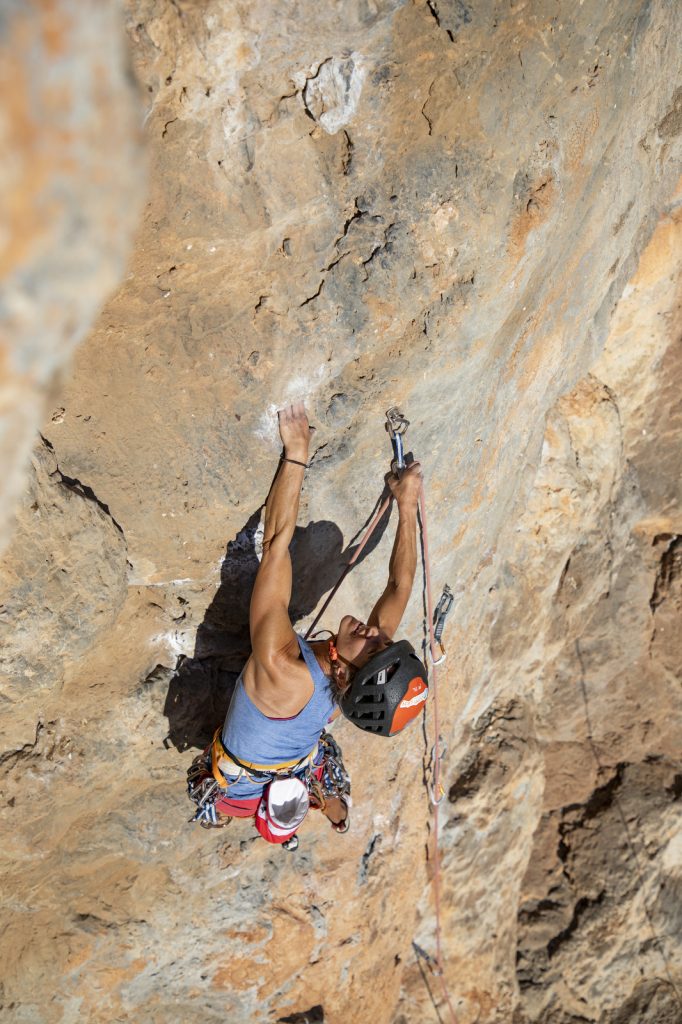
Today, Wirtz is based in Lake Tahoe, rock guiding at Lover’s Leap and running Earth Play Retreats, her own climbing and yoga business. Throughout her career, she co-founded Girls Education International with Scully, helping expand access to education for girls around the world. She now works with the Women’s Lead Club to create spaces where women can learn, grow, and build independence in the sport.
FINDING YOUR CURRENT
Allie Ace first discovered whitewater rafting halfway across the world, guiding international adventure trips. Surrounded by seasoned guides, she realized she had been living near one of the country’s most iconic rafting regions all along — the American River, just outside Lake Tahoe.
Motivated, she signed up for rafting guide school in Truckee.
“It was freezing,” she recalled. “There was snow on the ground, the river was shallow and rocky, and I was completely out of my element.”
The reality was a stark contrast to the warm rivers of Costa Rica. Still, something clicked. She spent the summer building skills and finding her footing. By the time she became a raft guide, however, one thing felt certain: she would never become a whitewater kayaker.
Life has a way of rewriting those narratives.
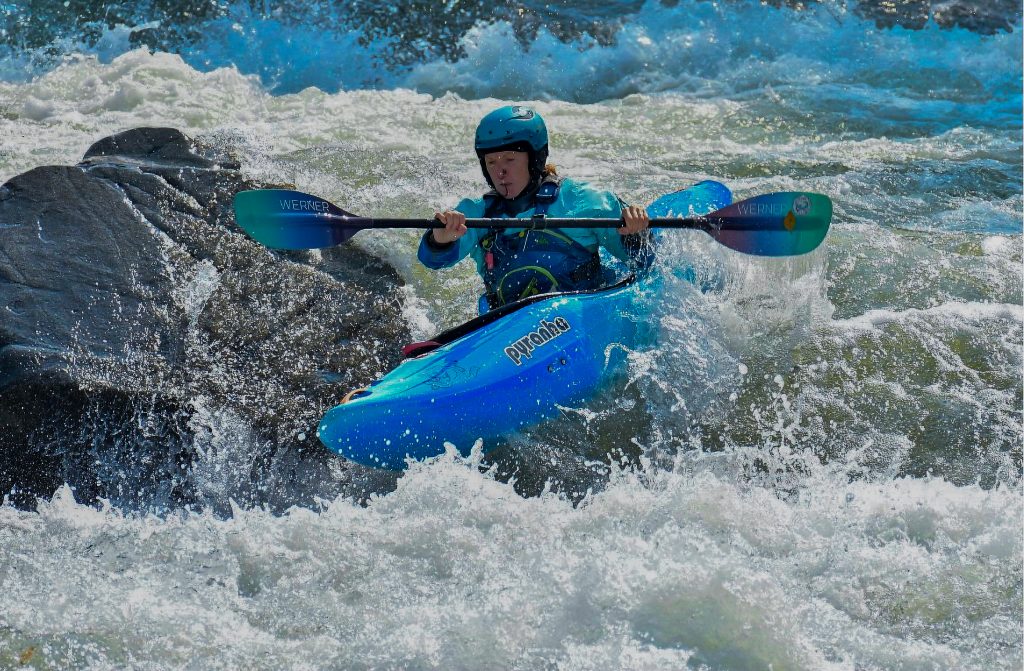
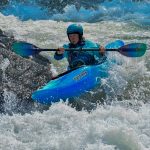
With encouragement from her river community, curiosity overcame fear, and she soon found herself navigating Class III rapids on a kayak.
In the spring of 2020, she visited the South Fork of Silver Creek to watch a group of kayakers its Class V rapid.
“Out of all the people running the river that day, there was one woman,” Ace said. “I looked at her and thought, I have to know her.”
Ace had become acutely aware of how male-dominated the outdoor industry could be, often having to prove herself to coworkers and guests who didn’t expect their guide to be a woman. Finding other women in whitewater sports wasn’t always easy.
The paddler who caught her eye that day, Melissa DeMarie, soon became a mentor. Their chance encounter led to hands-on guidance, learning new techniques, borrowing equipment, and building confidence on the water. Before long, Ace was working alongside her — teaching yoga at DeMarie’s kayak retreats and eventually becoming certified to teach beginner kayaking herself.
“I fell in love with introducing women to the sport,” she said.
In an industry where she didn’t always feel represented, the work became personal.
“It’s really hard to do something when you don’t see somebody who looks like you doing it,” she said.
Through California Watersport Collective, a nonprofit founded by DeMarie, Ace became part of a network of women who showed up for each other — sharing skills, building confidence, and creating space where there hadn’t always been one. It wasn’t just about improving on the water. It was about belonging.
That network of women showed her she could handle more than she thought possible — though they didn’t give her much warning.
On a trip to Banks, Idaho, where rivers shift from calm stretches to raging rapids, they told her just hours before that she would be running a Class V rapid — something she had never attempted. With no time for fear and surrounded by women who believed in her, Ace trusted both them — and herself — enough to launch into the river and follow their lead.
“It was an incredible experience,” Ace said. “I had done something I never imagined I could do.”
The same person who once said she would never kayak had run a Class V rapid. Not because she suddenly became fearless, but because she was supported by people who helped her see what she could do before she fully believed it herself.
“They could have kept going and run tougher rapids, but they didn’t,” she said. “They just wanted to celebrate with me.”
For Ace, what matters most isn’t just the rivers she’s run, it’s the people who made those moments possible — and the community she now helps create for other women finding their way into the sport.
For the past 15 years, Allie Ace has built a life shaped by rivers, mountains, and the people who move through them. Based in Lake Tahoe, she works as an outdoor guide, instructor, and educator, leading rafting trips in Truckee and teaching whitewater kayaking.
From first runs on unfamiliar rivers to long nights on alpine walls, both Ace and Wirtz describe careers shaped as much by the people around them as by the landscapes themselves.
Editor’s note: This article originally appeared in the Summer 2026 edition of Tahoe Magazine.


Support Local Journalism

Support Local Journalism
Readers around Lake Tahoe, Truckee, and beyond make the Sierra Sun's work possible. Your financial contribution supports our efforts to deliver quality, locally relevant journalism.
Now more than ever, your support is critical to help us keep our community informed about the evolving coronavirus pandemic and the impact it is having locally. Every contribution, however large or small, will make a difference.
Your donation will help us continue to cover COVID-19 and our other vital local news.