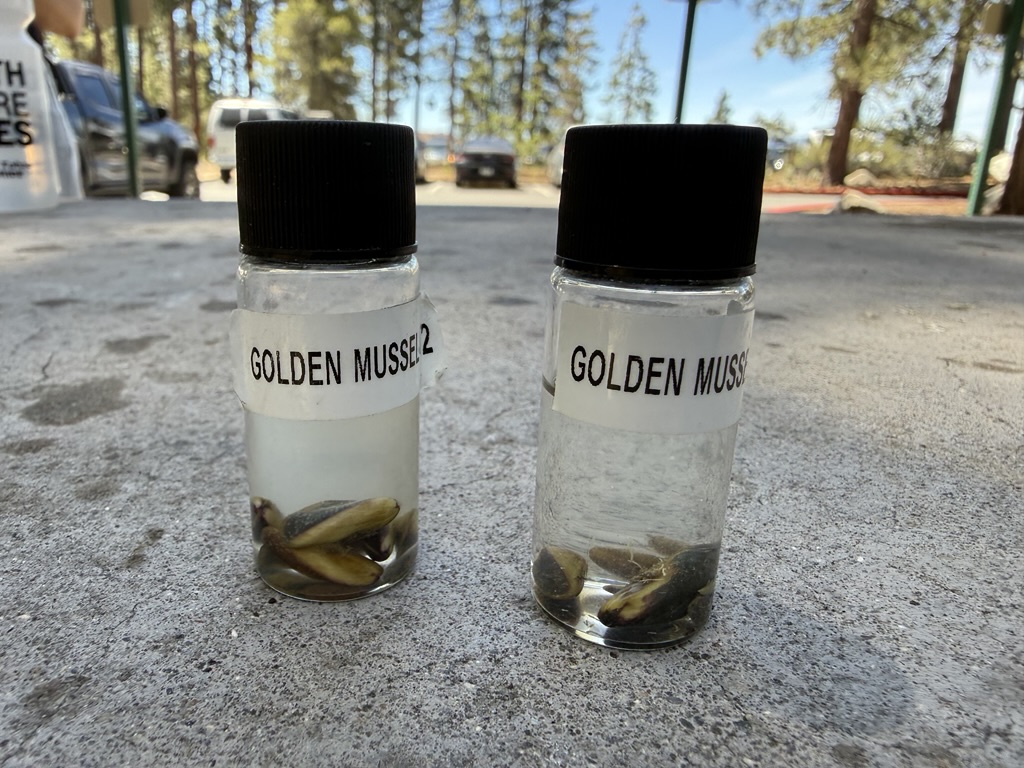
Golden mussels intercepted at Meyers watercraft inspection station
Laney Griffo / Tahoe Daily Tribune
MEYERS, Calif. – On Sunday, May 31, inspectors at the Meyers watercraft inspection station found four golden mussels attached to a boat. The four adult golden mussels were spotted on the outside of the vessel, attached to the transom and trim tabs, and may have been alive. The shells were closed and still attached to the boat by byssal threads.
“Lake Tahoe watercraft inspectors stopped golden mussels from entering Lake Tahoe earlier this week during an aquatic invasive species inspection at the station in Meyers, Calif,” a statement from Tahoe Regional Planning Agency said. “This is the second vessel intercepted at Lake Tahoe, and the first this season, with the highly invasive mollusk onboard since the species was detected for the first time in North America in 2024 in the California’s Sacramento-San Joaquin Delta.”
The vessel was a 30-foot-long cruiser traveling from the Sacramento Delta. The boat is awaiting a mechanical inspection to ensure no adult golden mussels are in internal compartments. It will also be placed in a 30-day quarantine.
“Inspectors spotted the four golden mussels on a vessel arriving from the Sacramento area where the invasive species has spread since its detection near the Port of Stockton in October 2024. Stronger protections at Lake Tahoe since the discovery are working, according to the agencies,” said TRPA. “In response to golden mussels being identified just a few hours away from Lake Tahoe, TRPA strengthened the mandatory inspection program in early 2025 to include mandatory decontaminations for boats arriving from outside the Lake Tahoe Region. Boats that are used only in Lake Tahoe do not need to be re-inspected.”
All boats entering Lake Tahoe must be inspected before entering water. The inspection includes an interview about what body of water the boat last touched, as well as a visual inspection for any standing water in the boats. Boats that have been in high-risk bodies of water or are not completely dry are decontaminated with 120-degree water. A seal is placed on the boat and trailer, which can only be removed by boat ramp employees. They reattach the seal once the boat leaves the water.
“Protecting Lake Tahoe truly takes everyone working together,” said Chris Kilian, aquatic invasive species program manager for Tahoe RCD. “It’s one of the things that has made Lake Tahoe a national model for preventing new aquatic invasive species. Highly trained inspectors are an important line of defense, but when everyone practices Clean, Drain, Dry protocols, they are helping protect the waters they enjoy and keeping them pristine for future generations.”
This season, inspectors have found 17 vessels with aquatic invasive species, although this is the first this year with the much more invasive golden mussel.
“The Tahoe Regional Planning Agency (TRPA) and Tahoe Resource Conservation District (Tahoe RCD), which have managed the Lake Tahoe Watercraft Inspection Program since 2008, say that vigilance must remain high to stop the spread of aquatic invasive species in the Lake Tahoe Region,” said TRPA. “Boaters, paddlers, beachgoers, and anglers can help protect the lake they enjoy by ensuring boats and gear are Clean, Drained, and Dry when moving from one body of water to another.”
-
A photo of where the golden mussels were found on the vessel.
Provided / TRPA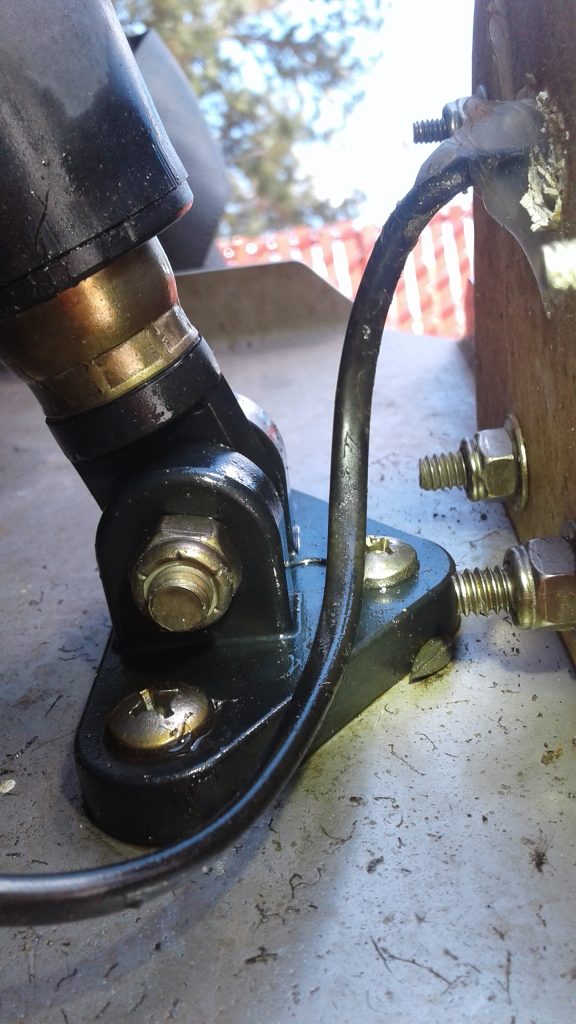
-
A photo of where the golden mussels were found on the vessel.
Provided / TRPA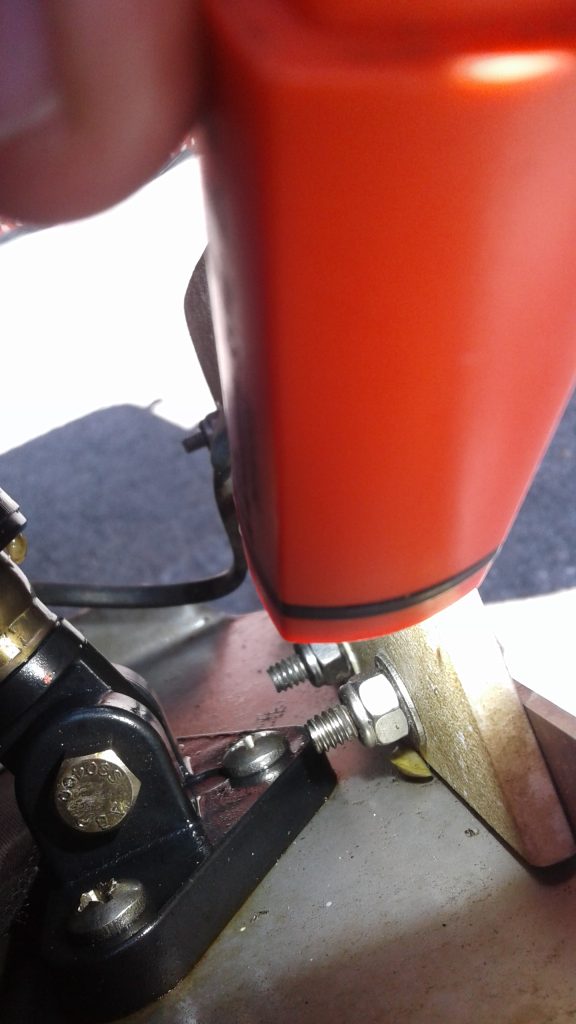







Support Local Journalism

Support Local Journalism
Readers around Lake Tahoe, Truckee, and beyond make the Sierra Sun's work possible. Your financial contribution supports our efforts to deliver quality, locally relevant journalism.
Now more than ever, your support is critical to help us keep our community informed about the evolving coronavirus pandemic and the impact it is having locally. Every contribution, however large or small, will make a difference.
Your donation will help us continue to cover COVID-19 and our other vital local news.