High Altitude Baking: The Secret Life of Baking Ingredients; Not All Flours Are Created Equal
When I started baking as a kid, around 12, there was only one flour I knew: all-purpose. Simple. One bag. End of discussion.
Today, walking down the baking aisle is like falling into Rabbit Hole Number 10,000. Cake flour. Pastry flour. All-purpose flour. Bread flour. Bleached or unbleached? Whole wheat, white whole wheat, red wheat, einkorn? Organic or conventional? And should I be grinding my own wheat?
Brain Freeze!
At this point, buying a ready-made dessert is beginning to sound pretty appealing.
Don’t give up, just learn how to choose the right flour that makes the difference between a tender, delicate cake and one that could double as a doorstop.And when baking at high altitude, that choice is even more important. Ingredients, such as flour, that had behaved beautifully for me at sea level weren’t always giving me the same results in the mountains. For this new mini-series, The Secret Life of Baking Ingredients, I am starting with flour as it seems to be the most confusing, at least to me.
It’s All About the Protein
Have you ever wondered why one flour makes a super tender cake ike genoise while another produces a chewy loaf of sourdough? Much of the answer comes down to protein. Wheat flour contains two important proteins: glutenin and gliadin. When flour is hydrated and mixed, these proteins move together to form gluten which provides the strength, elasticity, and structure that help baked goods hold together. Less protein generally means more tenderness and more protein means greater potential for strength, structure, and chew. That’s why you wouldn’t choose pastry flour for a chewy sourdough loaf or bread flour for a delicate French madeleine.
Back to the flour aisle. Which Flour Should You Buy?
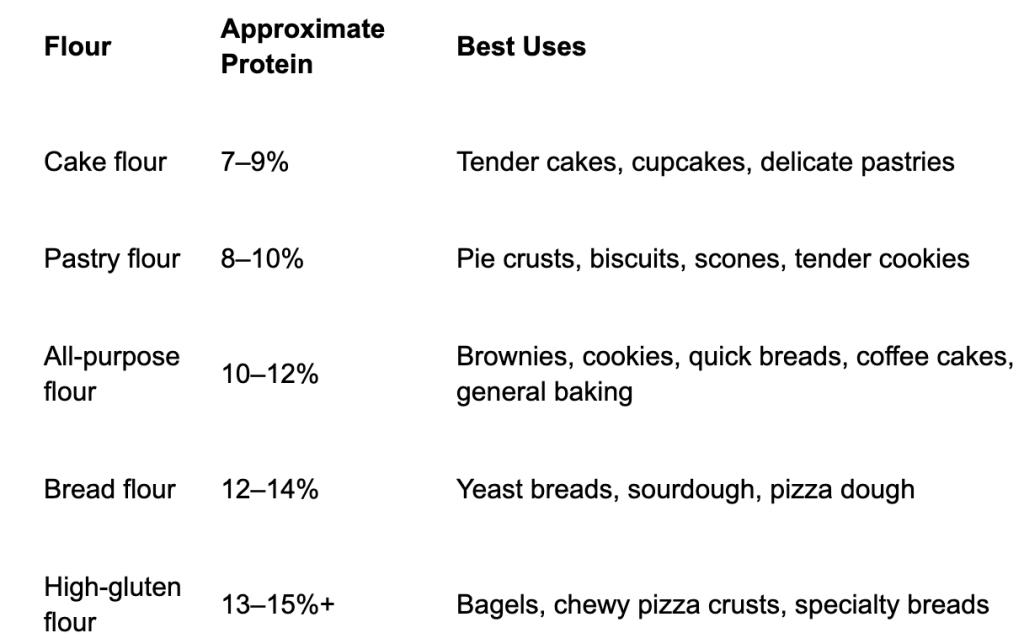
And protein percentages vary by brand as well. King Arthur Flour has the highest protein of most all-purpose flours at 11.7%, only 1% shy of their bread flour.
At high altitude, your cake may rise faster than its structure (insides!) and a support system. If the batter isn’t properly balanced, the result can be a sunken center, a coarse crumb, or a cake that collapses after baking. It is for this reason that I swapped out pastry flour for all-purpose flour for my coffee cake. I was afraid the pastry flour would not provide the necessary support. If your sea level recipe already uses all-purpose flour, then just adding in a few more tablespoons can help with structure. Should you NOT use pastry or cake flour? In the mountains? Of course not, but you can take precautions against disasters by swapping out 30% for all-purpose flour.
You Can Also Have the Right Flour and Still Get the Wrong Result
In my baking classes, I emphasize that technique matters just as much as ingredients. You can have a perfect recipe, carefully measured ingredients, and the ideal flour and “oops” the outcome by overmixing the batter. Once flour is hydrated, mixing starts gluten development. That’s what you want when you’re kneading bread dough and want strength and elasticity but not when making muffins or brownies. Overmixing, especially the eggs in your batter, introduces extra air which can cause your baked goods to rise even faster than they already do as a result of lower air pressure on its own, creating even more of a chance of a crater happening. So when your recipe says mix until just incorporated, that’s exactly what it means. Better to leave a few “lumps” than to create extra “air”.
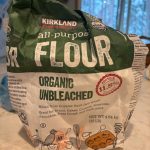
What flour do I prefer? After years of using expensive “boutique” flours, I have settled on Kirkland Organic All-Purpose Flour. Using close to 20 pounds of flour a month to convert my recipes I prefer $1 a pound and truth be told, I don’t see much difference. No shaming.
Next in The Secret Life of Baking Ingredients, I’ll be exploring The Dark Side of Chocolate.
What’s the difference between natural cocoa powder, Dutch-process cocoa, and unsweetened chocolate? Can you substitute one for another? And does your choice of chocolate make a difference when baking at high altitude?








Support Local Journalism

Support Local Journalism
Readers around Lake Tahoe, Truckee, and beyond make the Sierra Sun's work possible. Your financial contribution supports our efforts to deliver quality, locally relevant journalism.
Now more than ever, your support is critical to help us keep our community informed about the evolving coronavirus pandemic and the impact it is having locally. Every contribution, however large or small, will make a difference.
Your donation will help us continue to cover COVID-19 and our other vital local news.