From Iron Rails to Family Roots: One Chinese Railroad Worker’s American Legacy
Building the western half of the Transcontinental Railroad across the towering Sierra Nevada was made possible by the courage, endurance, and unwavering determination of nearly 16,000 young Chinese men and boys from Guangdong Province. Small in stature, wearing their traditional queues, they appeared an unlikely force upon whom the destiny of a nation would depend. Yet it was their hands that carved America from Sacramento to the Summit and beyond.
The greatest test awaited them at Donner Summit. There, Tunnel No. 6 stood as the final and most formidable barrier—a mountain of solid granite that refused to yield. For sixteen relentless months, crews labored day and night, drilling by hand and blasting through the rock with black powder and the newly invented nitroglycerin. Then, on August 8, 1867, the two ends of the tunnel finally met. As daylight pierced the darkness, cheers must have echoed through the mountain, celebrating a triumph won through unimaginable sacrifice.
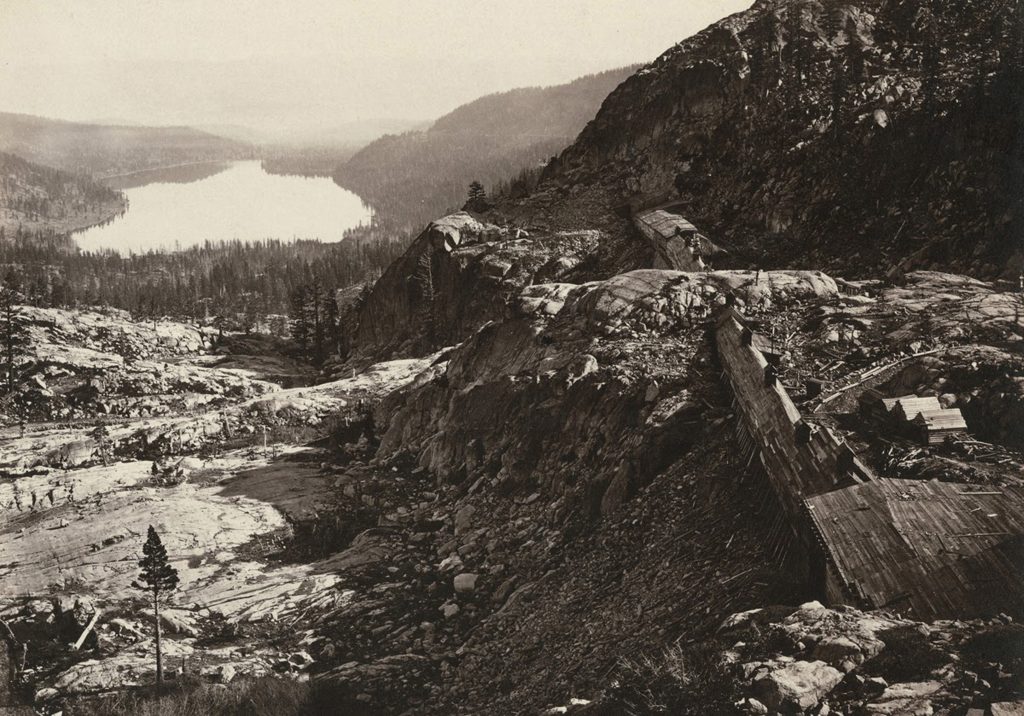
The engineering achievement of the railroad has been carefully preserved in history. But the names of the men who built it were largely forgotten, swallowed by the shadows of time. Recovering even a handful of those identities has become a remarkable story in itself.
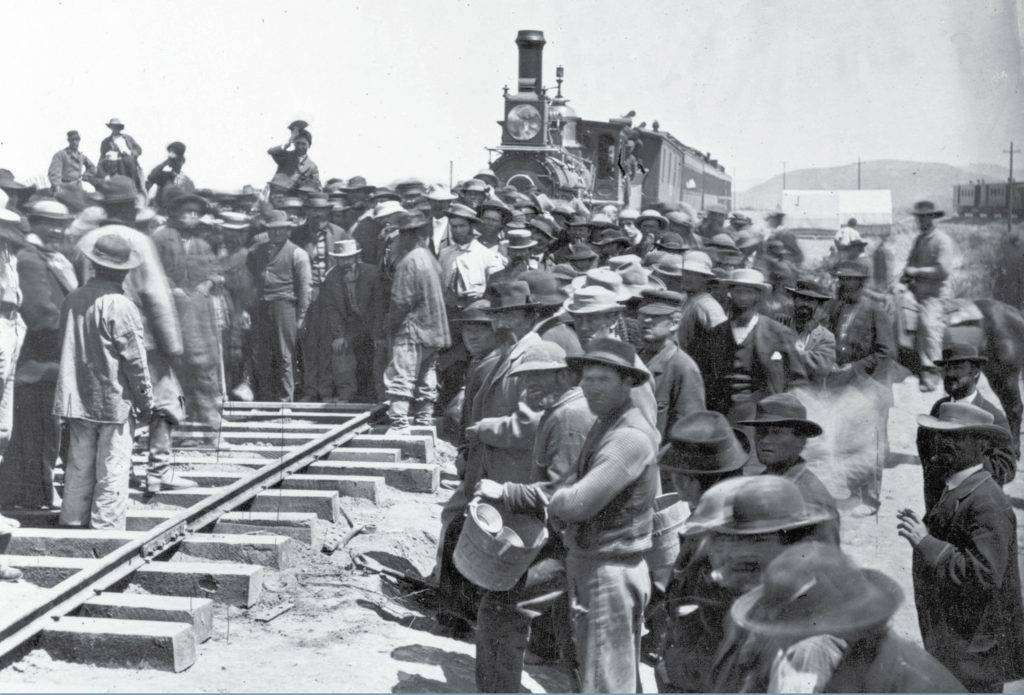
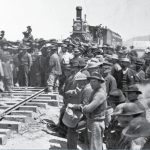
Yet the railroad was only the beginning. The greatest story is the human one. After the Golden Spike was driven at Promontory, these workers and their families faced decades of discrimination, exclusion, and hardship. Their perseverance did not end with the railroad. It continued through generations, as they struggled against prejudice and unjust laws while helping build the America they had already sacrificed so much to create.
For most of the 16,000 Chinese men who built the western half of the Transcontinental Railroad, the American dream ended with the railroad itself. Anti-Chinese laws prevented them from bringing wives from China, creating a staggering imbalance of nearly twenty Chinese men for every Chinese woman in America. The shortage fueled a cruel human trafficking network in which Chinese women and young girls were smuggled into the United States to become domestic slaves, known as mui tsai, or were forced into prostitution. As a result, relatively few descendants of these heroic railroad workers exist today.
My great-grandfather, Hung Lai Wah, was among the fortunate few who found both freedom and family.
In the early 1880s, Lai Wah met a young woman named Ah Ying. She had been brought to San Francisco in 1880 as a mui tsai, enduring years of physical and emotional abuse while never losing hope that one day she would be free. Their paths crossed during the Chinese New Year celebration of 1884, and they fell in love almost instantly. But Ah Ying was still owned by her captors, who had very different plans for her future.
With the help of the Occidental Mission Home for Girls on Sacramento Street, Lai Wah helped orchestrate Ah Ying’s daring rescue in September 1886. Yet even after escaping slavery, another obstacle stood between them. The Mission Home matrons refused to allow Ah Ying to marry Lai Wah because he was not a Christian.
Determined to choose her own destiny, Ah Ying eloped with Lai Wah. Their happiness was short-lived. During their honeymoon, highbinder tong members kidnapped her, intending to sell her to a San Francisco brothel. Refusing to surrender, the courageous young woman escaped on foot through the streets of San Francisco, fighting her way back to freedom—and back to Lai Wah.
This extraordinary true story of love, courage, kidnapping, and perseverance filled the pages of San Francisco newspapers in 1889 and became the inspiration for my historical book, Three Coins. Today, more than one hundred descendants of Ah Ying and Lai Wah carry forward their legacy, contributing to American society in every profession and every walk of life.
For decades, Lai Wah never spoke about helping build the Transcontinental Railroad. His story was finally revealed by his son, Kim Seung Hong, during his 100th birthday celebration. When my sister simply asked him to talk about his father, the centenarian launched into an impromptu tribute to the Chinese laborers who united America by building the railroad across the Sierra Nevada.
Then he quietly added, “My father came over, and my uncle came over to work on this railroad. But my Uncle Jick Wah lost his eye in a blasting accident.”
In that simple statement, our family’s hidden history came to life.
Today, Lai Wah’s story has become part of the permanent exhibits at the California State Railroad Museum and has been preserved through documentaries and historical recreations, including CNN’s This Land – The Golden Trail, the History Channel, and Voice of America.
For my family, Donner Summit and Tunnel 6 are sacred ground. It was there that Lai Wah and his brother Jick Wah battled granite with black powder, nitroglycerin, hand drills, and unimaginable determination. Their labor helped conquer the greatest engineering obstacle on the Transcontinental Railroad, physically and psychologically uniting the United States for the first time.
Yet the greatest legacy of the railroad is not the iron rails themselves, but the lives they made possible. The descendants of those once-forgotten laborers have become physicians, nurses, psychologists, neuroscientists, teachers, engineers, pilots, business leaders, artists, and public servants. Their achievements stand as living monuments to the courage, sacrifice, and perseverance of the young Chinese immigrants who helped build America.
It began with a railroad.
It became the story of a nation.
And it remains, above all, an American story.
To learn more about the building of the Steam-Breathing Dragon and Chinese Life in Truckee join us for the Museum of Truckee History historical speaker series.
When: Tuesday, July 14th
Time: 6:00 – 7:00 pm
Where: 10356 Truckee Airport Road. Truckee
The two speakers, Linda Bentz and Russell Low, are both accomplished authors and speakers. For more information on the presentations and the speakers, please go to https://MuseumofTruckeeHistory.org/speaker-series.


Support Local Journalism

Support Local Journalism
Readers around Lake Tahoe, Truckee, and beyond make the Sierra Sun's work possible. Your financial contribution supports our efforts to deliver quality, locally relevant journalism.
Now more than ever, your support is critical to help us keep our community informed about the evolving coronavirus pandemic and the impact it is having locally. Every contribution, however large or small, will make a difference.
Your donation will help us continue to cover COVID-19 and our other vital local news.